

Publication date: February 2026
Amid urban congestion, commuter traffic, and a mobility system that remains largely dependent on private cars, Italy faces a concrete challenge: reducing the number of vehicles on the road. without compromising accessibility and travel times. According to the latest analyses, ISPRA1, passenger transport in our country is still dominated by private road mobility, with a modal share hovering around 79% for cars and motorcycles: an indicator that confirms how the path toward shared and sustainable mobility still faces several challenges. Added to this is an increasingly crucial issue in large cities: traffic congestion. The Global Traffic Scorecard 20252 by INRIX highlights how Rome is the most congested Italian city, with 76 hours lost in traffic per driver each year, followed by Milan with 67 hours. In this scenario, reducing the number of cars on the road becomes a priority for both urban and suburban areas, and carpooling emerges as an immediate and strategic solution to make home-to-work (and home-to-university) commuting more efficient, reducing traffic and emissions without requiring new infrastructure. Taking stock of the spread of this sustainable travel mode is Jojob Real Time Carpooling, which in the 2026 edition of its National Observatory on Carpooling, analyzed the data on shared trips that took place over the past year.
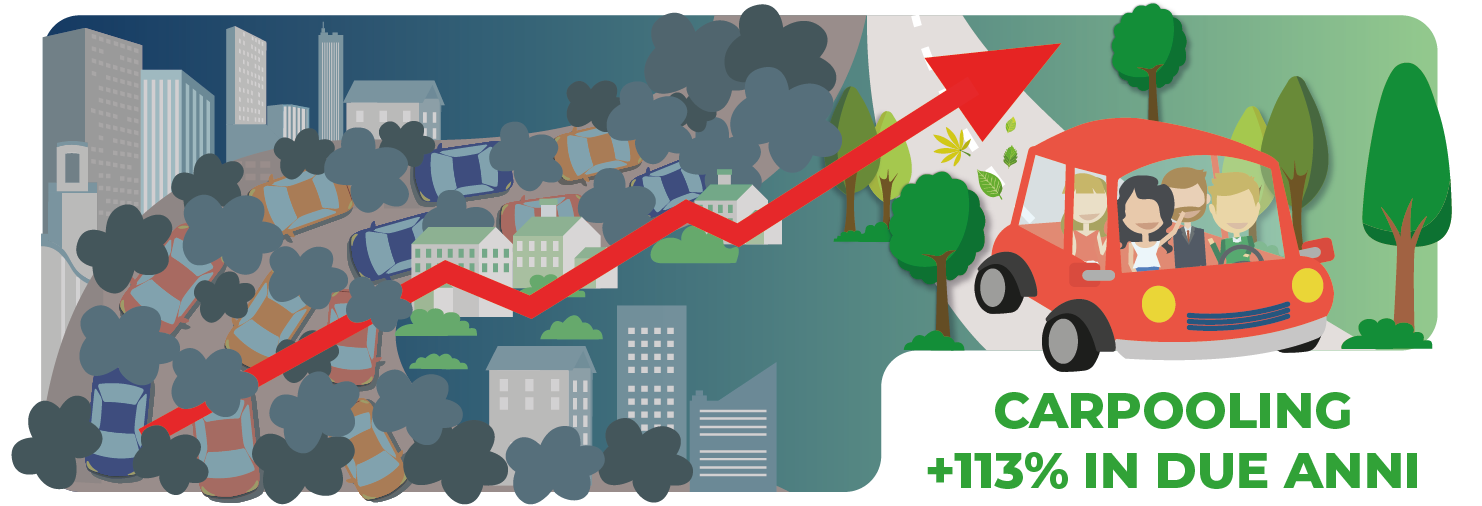
The number of trips more than doubled compared to 2023, rising from 373.767 to 795.335 (+113% in two years).
The CO₂ saved went from 641.135 kg to 1.623.442 kg (+153% in two years).
The number of cars removed from the roads increased from 212.410 in 2023 to 454.819 in 2025.
56% of trips in 5 regions: Piedmont, Apulia, Lombardy, Emilia-Romagna, Latium.

454.819 Passengers Transported
Equivalent to 6 sold-out San Siro Stadiums

454.819 cars removed from the road
Equivalent to 8 times the surface area of Vatican City

1.623.442
kg of CO₂ saved
Equivalent to 11 blue whales

€2.496.184 saved
Equivalent to 20.000 weekly shopping carts

12.488.149 km saved
Equivalent to 28 orbits around Jupiter's equator
In 2025, corporate carpooling monitored by the Jojob Observatory confirmed a positive growth trend, with cross-cutting increases across all main indicators compared to 2023. The kilometers saved reached 12.488.149 (compared to 9.662.895 in 2024 and 4.931.175 in 2023), representing a 153% increase in two years, while total trips rose to 795.335 compared to 373.767 in 2023. Parallel to this, the direct impact on traffic reduction also grows: in 2025, the cars removed from the roads (passengers transported) reached 454.819, more than double compared to the 212.410 in 2023 (+113%). On the environmental front, the CO₂ saved grew even faster than the number of trips, reaching 1.623.442 kg compared to 641.135 kg in 2023 (+153%).
Finally, the overall economic benefit generated by shared mobility also grew: in 2025, the estimated economic savings reached €2.496.184, up from €986.263 in 2023 (+153%), reinforcing the value of carpooling as a concrete lever for both sustainability and the cost-effectiveness of daily commutes.
The number of “cars removed from the roads,” calculated as passengers transported thanks to sharing, reached 454.819 in 2025.. In 2023, the same indicator stood at 212.410.
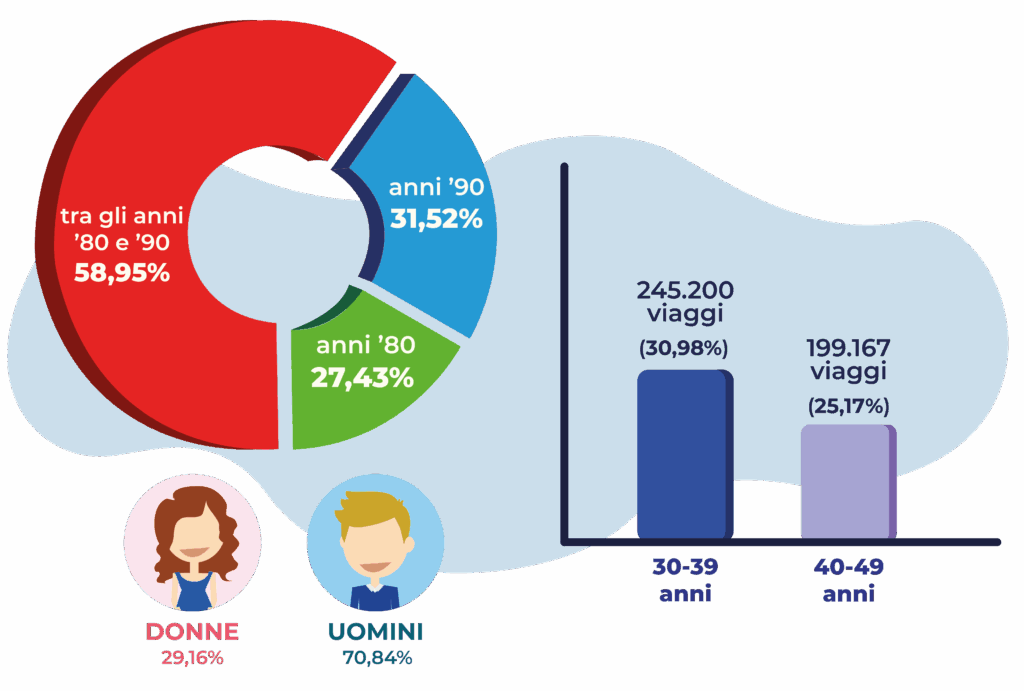
The Observatory’s data shows that carpooling is a well-established choice, particularly among demographics in their peak working years, with a user base heavily concentrated between Millennials and the “1980s” generation.. In terms of demographics, the 58.95% of users were born between the 1980s and 1990s, with those born in the 1990s at 31.52% and those born in the 1980s at 27.43%.
Looking at the age groups in relation to trips, the 30–39 age bracket is the most active, with 245.200 trips (30.98%), followed by the 40–49 age group with 199.167 trips (25.17%). From a gender perspective, over 7 out of 10 trips are made by men (70.84%), while women account for 29.16%. Women use carpooling as passengers more frequently (63.02%) than men (54.80%).
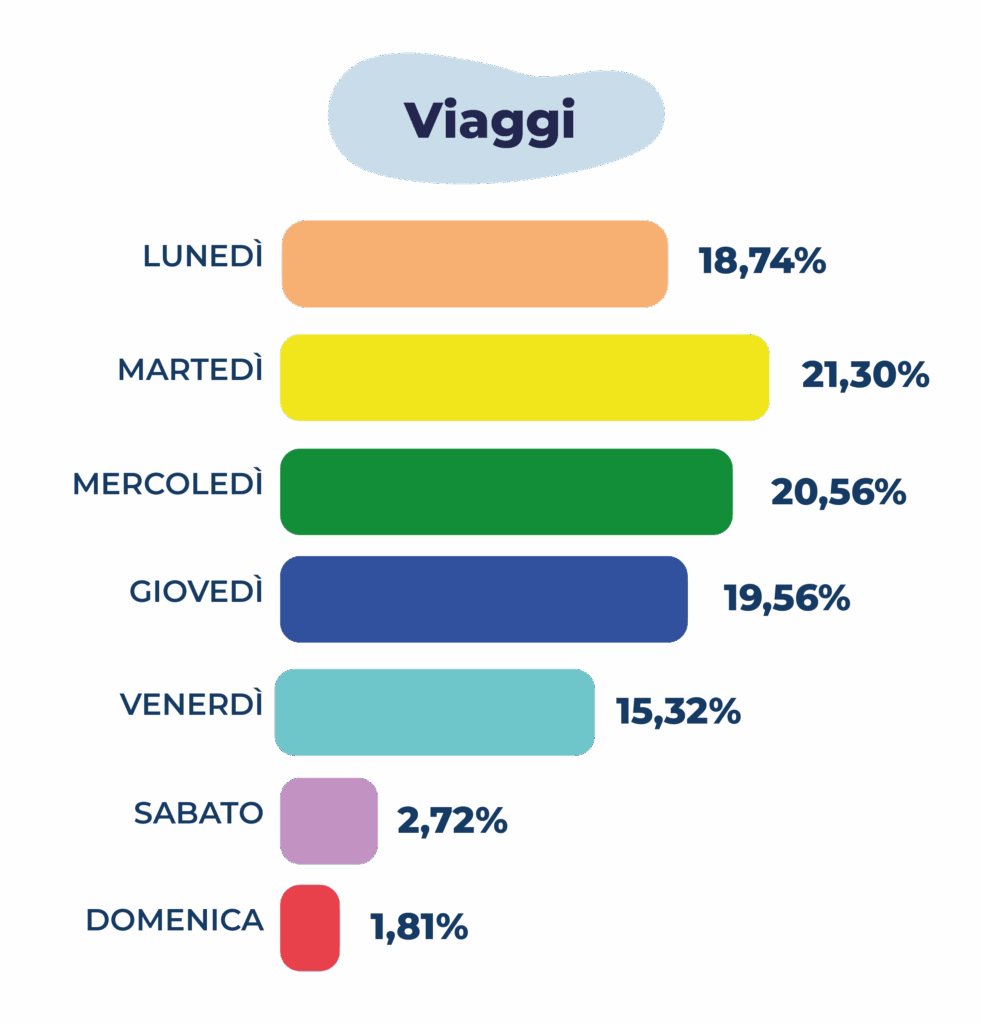
The data on the weekly distribution of trips provides an extremely clear picture of users’ mobility habits, highlighting an almost total concentration of trips on weekdays.
95.48% of trips occur between Monday and Friday, with 4.53% taking place over the weekend—a figure that confirms mobility is tied to work or study purposes rather than leisure. The absolute peak is recorded on Tuesdays, with 169.368 trips, accounting for 21.30% of the weekly total. Wednesday (20.56%) and Thursday (19.56%) follow, outlining a particularly heavy concentration of demand in the middle of the week. Monday remains high (18.74%), while Friday shows a significant drop, stopping at 15.32%, with nearly 48.000 fewer trips compared to Tuesday.
Even more evident is the reduction recorded over the weekend: Saturday accounts for just 2.72% of total trips and Sunday 1.81%, values eight and eleven times lower, respectively, than on the peak day.
March is the month with the highest number of shared trips namely 84.125 (10.58%), followed by May with 82.331 (10.35%) and April with 78.242 (9.84%). The month of August, on the other hand, drops to 23.989 trips (3.02%). The weekly peaks are concentrated between Tuesday with 169.368 trips (21.30%) and Thursday with 155.551 (19.56%). The most frequent time slot is from 7:00 AM with 116.404 trips (14.64%)
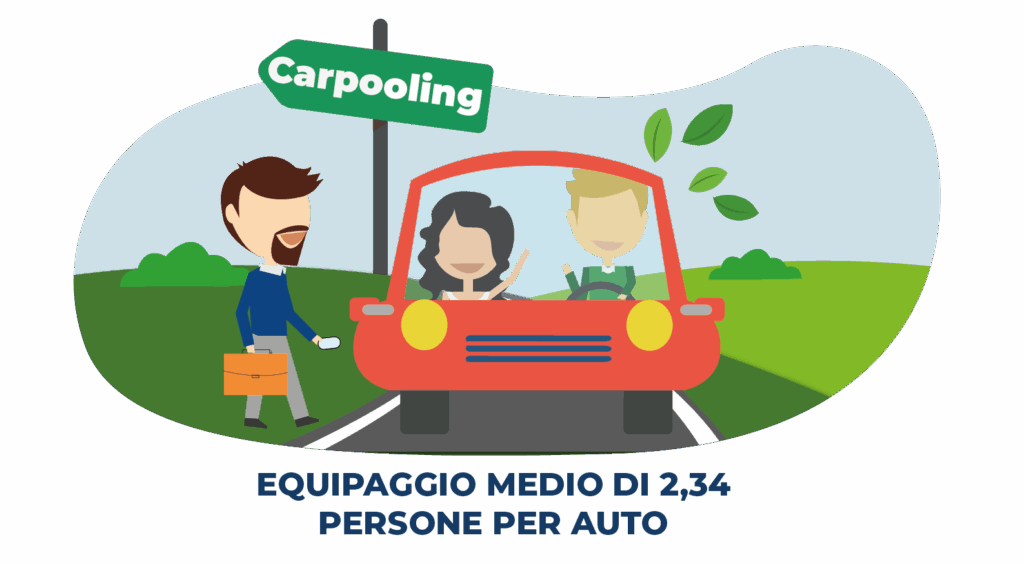
In 2025, the Jojob Observatory recorded 795.335 shared trips: 340.516 completed as drivers and 454.819 as passengers. The average occupancy is 2.34 people per car.
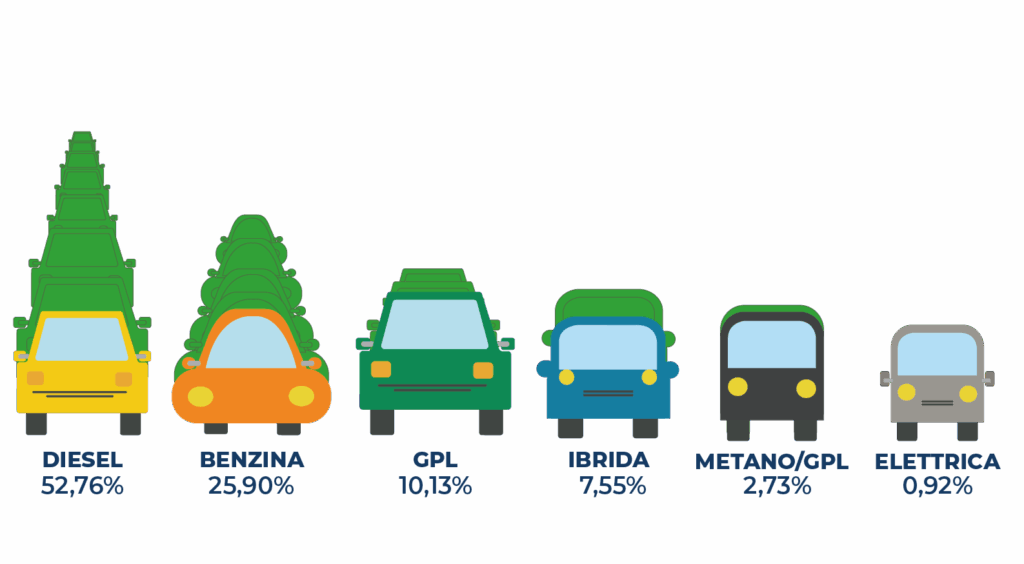
In 2025, over half of the trips were made in diesel cars, accounting for 178.747 trips (52.76%), followed by petrol with 87.726 trips (25.90%) and LPG with 34.333 trips (10.13%). Hybrid cars totaled 25.593 trips (7.55%), while electric cars recorded 3.126 trips (0.92%). Methane/LPG dual-fuel vehicles made up the remainder with 9.238 trips (2.73%).
A figure that provides a snapshot very close to the current Italian vehicle fleet and reveals, between the lines, a structural limitation of public mobility policies. Indeed, the prevalence of diesel suggests that, particularly over the medium-to-long distances typical of suburban commuting, vehicle choice remains heavily driven by mileage cost and the lack of truly competitive alternatives. In this scenario, the transition toward lower-impact powertrains is progressing more slowly—not so much due to cultural resistance, but rather owing to the absence of an infrastructural strategy and targeted incentives for suburban routes, where public transport is often lacking.
In 2025, corporate carpooling monitored by the Jojob Observatory recorded 795.335 total trips, growing from 641.390 trips in 2024, representing a year-over-year increase of approximately +24%.. The geographical distribution confirms widespread national adoption, with a higher concentration in regions characterized by a high commuter mobility. Even in comparison with the previous year, the
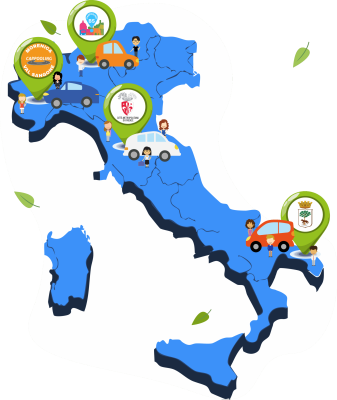
56% of trips continue to be concentrated in five regions—Piedmont, Apulia, Lombardia, Emilia-Romagna, and Lazio —representing the structural core of corporate carpooling in Italy. It is no coincidence that the top-performing regions have seen active involvement from several local municipalities. In particular, the Metropolitan City of Turin, Brescia along with 14 neighboring municipalities, the Metropolitan City of Florence, and the Municipality of Lecce launched pilot public incentive projects for carpooling, thereby driving strong growth in results.
Piedmont confirms its first-place position: rising from 144.927 trips in 2024 to 145.641 in 2025, maintaining a very high share of the national total (18.31%) and consolidating an already mature model of home-to-work trip sharing. The Apulia further strengthens its position, growing from 64,305 trips in 2024 to 104,919 in 2025, an increase of over +63%, bringing it to second place nationally. The Lombardia grew significantly, from 98.879 trips in 2024 to 99.614 in 2025, while Emilia-Romagna rose from 79.748 to 96.950 trips, recording a growth rate of over +20%. The Lazio, which counted 49.173 trips in 2024, reached 62.484 in 2025—an increase of approximately +27%—also distinguishing itself for high environmental impact: 164.533 kg of CO₂ saved and over 1.26 million km avoided, consistent with longer average travel distances typical of suburban commuting.
The comparison between the two years also highlights a progressive geographical extension of the phenomenon. In 2025, several regions that held a very minor share in 2024 emerged, thereby showing
interesting trends This is the case for Calabria, which moves from a residual presence in 2024 to entering the 2025 survey, signaling the start of an adoption process even in territorial contexts that were previously less involved. Alongside the major regions, smaller territories also continue to record significant volumes, such as
Basilicata (from 6.671 trips in 2024 to 24.688 in 2025), Umbria (from 22.073 to 22.181) and Friuli-Venezia Giulia (from 10.257 to 22.168), confirming how corporate carpooling responds to widespread and cross-cutting daily mobility needs, often linked to systematic and inter-municipal commutes..
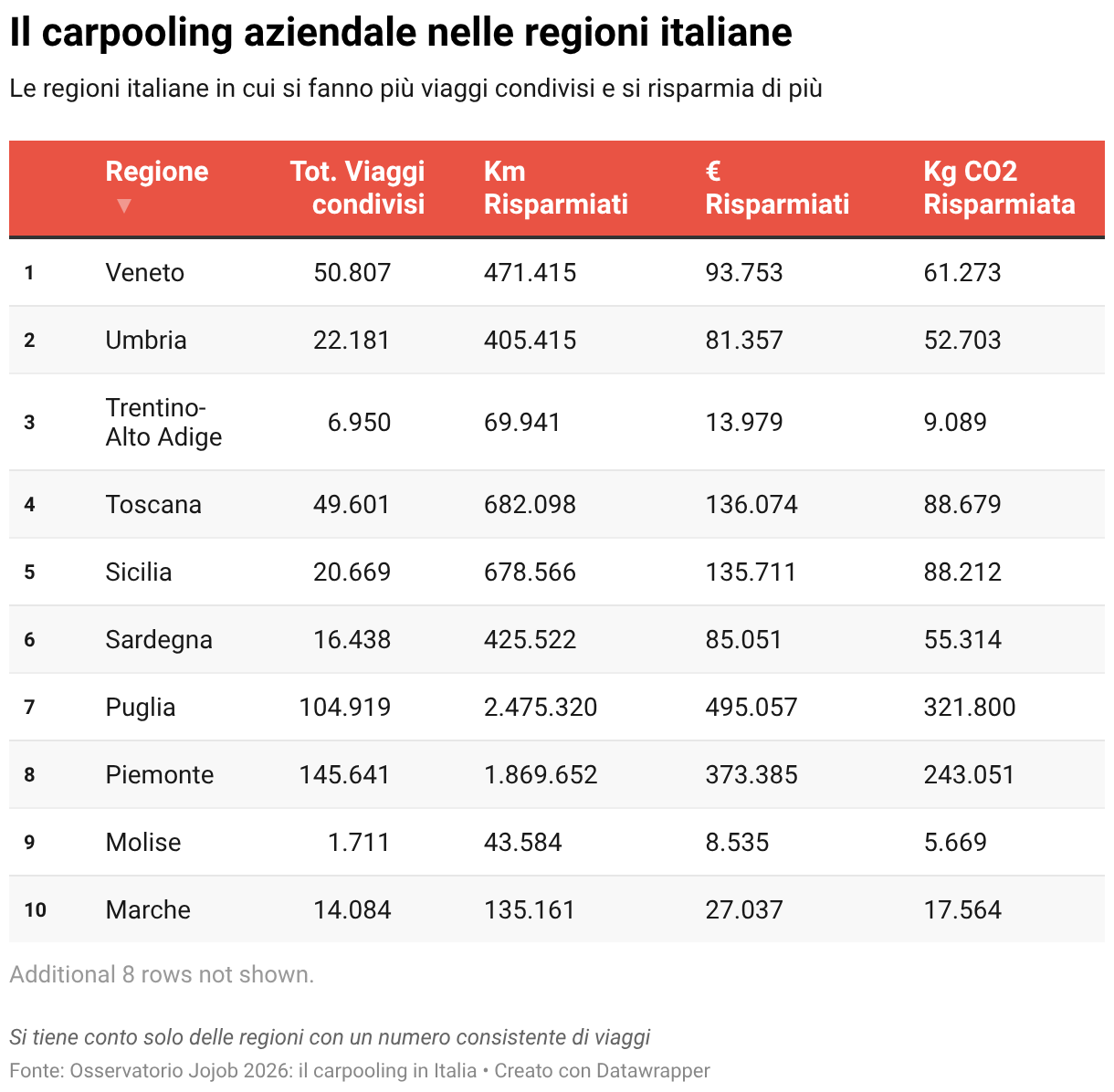
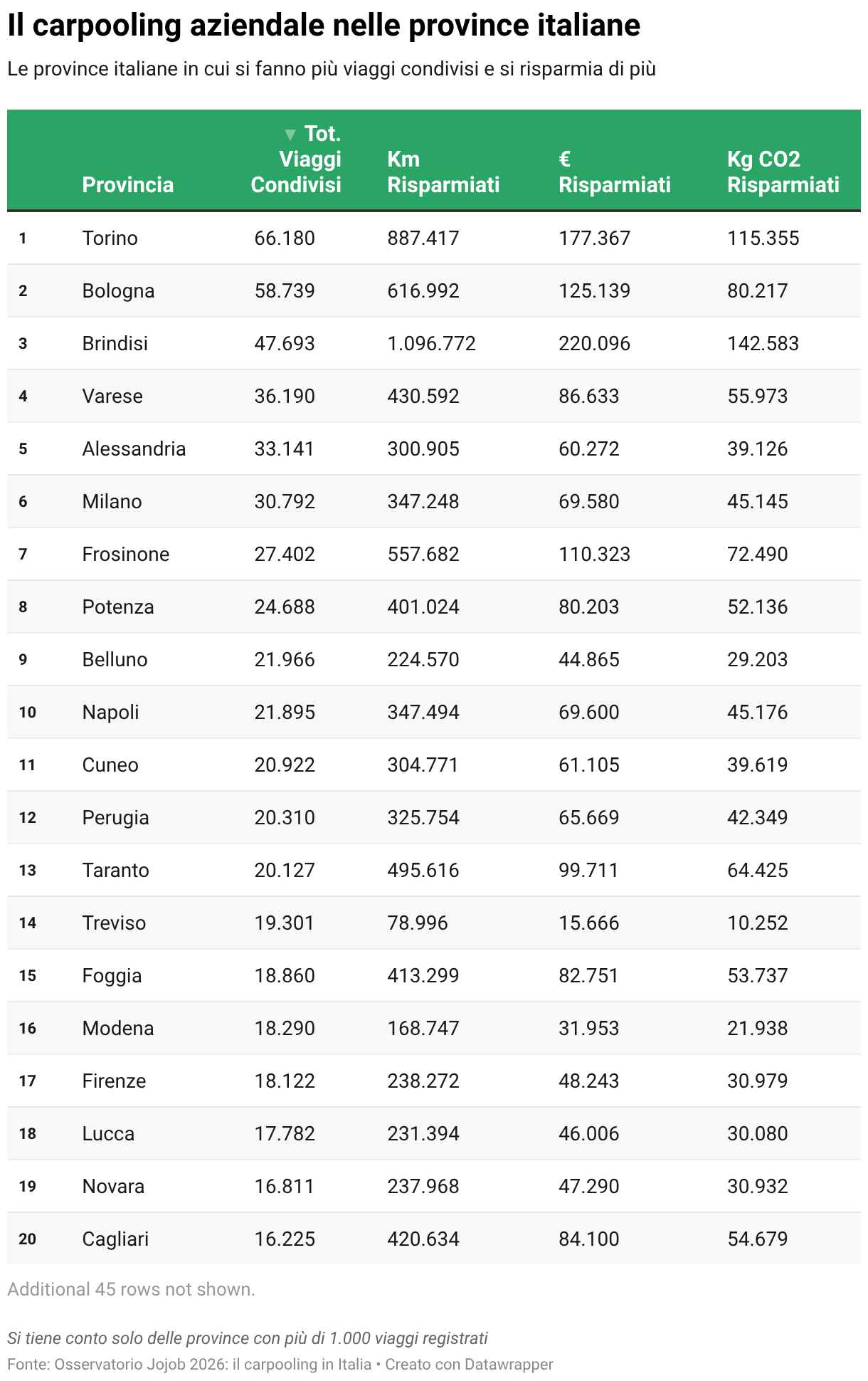
The provincial analysis allows for a more precise observation of where corporate carpooling is consolidating as a daily practice, intercepting real commuter flows and confirming substantial growth in carpooling in Southern Italy as well.
. In 2025, corporate carpooling monitored by the Jojob Observatory confirms a increasingly structured diffusion even at the provincial level, reinforcing the results that had already emerged in 2024.
Turin is confirmed as the leading province by number of shared trips, moving from
over 60.000 trips in 2024 to 66.180 in 2025
, reinforcing its role as a national hub for corporate carpooling. Bologna records one of the most significant growths, rising
from 41.597 trips in 2024 to 58.739 nel 2025, with an increase equal to +41,2%, while
Milan goes from 27.599 to 30.792 trips (+11,6%), confirming an already well-established demand in the major metropolitan contexts.
Alongside major urban centers, the comparison between the two years highlights particularly significant dynamics in areas characterized by suburban commuting, such as Brindisi, which went from 31.287 trips in 2024 to 47.693 in 2025 (+52.4%), combining these volumes with a significant environmental impact of over 1.09 million kilometers saved and 142.583 kg of CO₂ avoided.
. A marked growth is also observed in Taranto, which rises from 13,856 to 20,127 trips (+45.3%), and in Frosinone, which almost doubles its volumes, going from 13,715 to 27,402 trips (+99.8%), signaling a rapid adoption of carpooling in areas with limited public transport alternatives.
The provincial picture also highlights a strengthening and expansion of the territorial base for carpooling. Medium-small provinces like
Perugia (22.181 trips), Udine (22.168) and Potenza (24.688), confirm in 2025 considerable usage levels, while other locations enter or consolidate within the Observatory’s relevance tier. Savona…for example, exceeds the threshold of 1,000 trips, going
from 804 in 2024 to 1.041 in 2025 (+29,5%), Chieti goes from 7.739 to 9.245 trips (+19,5%), and Trapani goes from residual values in 2024 to 8.960 trips in 2025, entering the provincial ranking in a structured manner for the first time.
3 Methodological note:
To ensure a consistent and statistically significant interpretation, the provincial analysis considers exclusively those provinces that recorded over 1,000 carpooling trips in 2025.
In 2024, the national average distance for carpooling trips stood at 27.47 km, a figure significantly higher than the average distance of daily urban commutes, which in 2025 grew to reach an average distance of 31.9 km.
In 2024, the national average distance for carpooling trips stood at 27.47 km, a figure significantly higher than the average distance of daily urban commutes, which in 2025 grew to reach an average distance of 31.9 km. Analysis of average trip lengths by region provides a clear picture of the varying commuting dynamics across the national territory. The longest routes are recorded in Sicily and Calabria, where the average distance per individual carpooling trip exceeds 52 km, followed by Sardinia and Valle d’Aosta with average distances around 45 km. High values are also observed in Molise (41.0 km), Abruzzo (39.7 km), and Apulia (39.3 km), confirming daily commuting often linked to medium-to-long-distance travel. Positioned in the intermediate range are Lazio (34.9 km), Umbria (32.5 km), Liguria (31.3 km), and Campania (30.7 km), which align with or closely approach the national average.
Moving further down, Basilicata (26.5 km), Friuli-Venezia Giulia (25.3 km), and Tuscany (23.5 km) display more moderate distances, followed by Piedmont (22.4 km) and Lombardy (21.5 km). Finally, the shortest average distances are recorded in Emilia-Romagna (19.6 km), Trentino-Alto Adige (18.9 km), Marche (17.7 km), and Veneto (17.2 km). Overall, the data demonstrates how corporate carpooling addresses very diverse mobility needs, adapting both to regions characterized by long daily commutes and to contexts with shorter, more localized routes.
In recent years, the mobility landscape has been impacted by rising energy and operational costs, alongside demand that, in certain regions, has not returned to pre-pandemic levels
. This makes the issue of accessibility particularly relevant, especially in suburban areas and last-mile connections. In this scenario, certified carpooling presents itself as a strategic and complementary solution, capable of integrating local public transport services and helping to improve both accessibility and the effectiveness of mobility policies.
Without requiring any complex, capital-intensive infrastructure projects, carpooling unlocks immediately available transport capacity by utilizing private vehicles that are already on the road today
Italian roads, often carrying just a single occupant. This approach would make it possible to intercept a real demand for mobility that is currently not fully met by local public transportparticularly in suburban areas and in connections toward industrial hubs, university campuses, and infrastructure nodes. With just With a mere 0.2% of the resources currently allocated to local public transport, it would be possible to fund 16 million carpooling trips through private vehicle sharing, remove up to 16 million cars from the roads, and generate roughly 32 million euros in savings on travel expenses incurred by drivers.
Jojob Real Time Carpooling is a commuter carpooling service launched in 2015 by Bringme Srl Società Benefit. It relies on a free mobile app (Android and iOS) that allows users to plan routes, find compatible rides, share the trip, and track the benefits generated.
How does it work? Users registered on Jojob can connect with colleagues or other citizens traveling along the same route, thereby reducing commuting costs and the time spent searching for parking spaces.. The service proves particularly useful in strike days or in the event of unexpected disruptions, offering a practical and reliable alternative. to public transit. Every completed trip allows users to precisely calculate the saved CO₂ and accumulate points redeemable for prepaid vouchers spendable at major e-commerce platforms and retail chains across the country. Furthermore, the
sharing travel expenses is simple and straightforward thanks to an integrated payment system that allows users to split travel costs directly through the app.
Every company and territory looking to promote carpooling can also count on ongoing support from a specialized team at Jojob, designing not only marketing campaigns to back the initiative, but even more importantly, structuring an efficient incentive scheme.

Stay updated!
Check out the Jojob Observatories archive